In the intricate world of jewelry making, precision, efficiency, and comfort are non-negotiable. The micromotor, a cornerstone tool, has revolutionized how jewelers approach their craft, enabling everything from delicate engraving and stone setting to precise polishing and drilling. Unlike the bulky flex-shaft machines of the past, modern micromotors combine compact design with exceptional control and power.
With countless brands competing for attention—each touting unique features and performance specs—choosing the right micromotor can feel overwhelming. This article cuts through the clutter, presenting a meticulously curated list of the top 10 jewelry micromotors for 2025. Alongside the rankings, we provide a comprehensive buying guide to help you select a tool that elevates your artistry.
How to Choose the Perfect Jewelry Micromotor: Key Criteria
Before exploring our top picks, let’s review the essential factors that define a high-quality micromotor. These criteria will guide you toward a worthwhile investment that enhances your workflow.
Compact Size and Integration
Jewelry studios demand tools that balance power with a small footprint. Opt for a micromotor that integrates seamlessly into your workspace, minimizing clutter while maximizing efficiency.
Ergonomic, Lightweight Design
A lightweight, ergonomically designed handpiece reduces fatigue during long sessions, improving precision for intricate tasks like engraving or stone setting.
Precision and Stability
The best micromotors deliver smooth, vibration-free performance with minimal runout, ensuring consistent results even under varying loads. Long-term stability is critical for maintaining quality.
Torque and Power
While high RPM grabs attention, robust torque—especially at low speeds—is crucial for tasks like drilling hard metals or removing dense material without stalling. Look for a micromotor that balances speed and torque.
Low Noise and Vibration
Inferior tools often produce excessive noise and vibration, leading to fatigue and reduced control. A quality micromotor operates quietly and smoothly, enhancing precision and comfort.
Durability and Materials
Jewelry tools are long-term investments. Choose a micromotor built with durable materials and a robust design to withstand rigorous studio use. Professional-grade equipment ensures lasting performance.
Innovative Features
Brushless micromotors offer superior torque, quieter operation, and minimal maintenance. Advanced features like digital displays, memory settings, and overload protection streamline workflows and enhance precision for intricate jewelry work.
Top 10 Best Jewelry Micromotors in 2025
We’ve selected 10 standout models based on performance, design, and real-world user feedback, ensuring they meet the needs of professional jewelers.
1. RHJC Prime Sense A6 55K
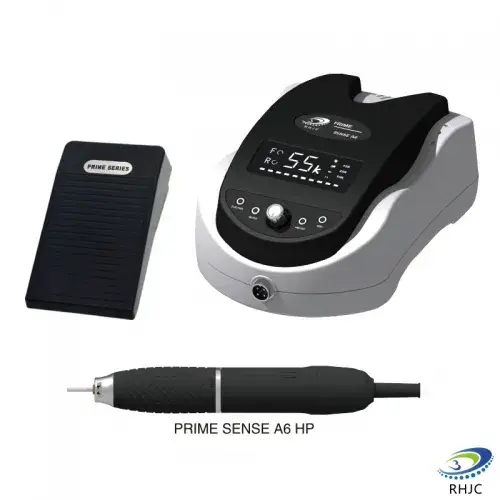
Core Technology: Brushless motor, intelligent speed control.
Highlights: The A6 builds on the Sense series with three pre-set speed settings (low, medium, high) for enhanced productivity. Features include foot-operated constant speed, hand/foot speed adjustment, overload protection, forward/reverse rotation, and a fault alarm.
Specifications: Maximum speed: 55,000 RPM; Output voltage: 0-36V; Output power: 230W; Maximum torque: 8.0 Ncm.
Why It Stands Out: Its blend of high speed, strong torque, and intuitive pre-sets makes it versatile for both delicate and heavy-duty tasks.
Best For: Professional jewelers and high-volume studios prioritizing precision and efficiency.
2. NSK Emax EVOlution Series
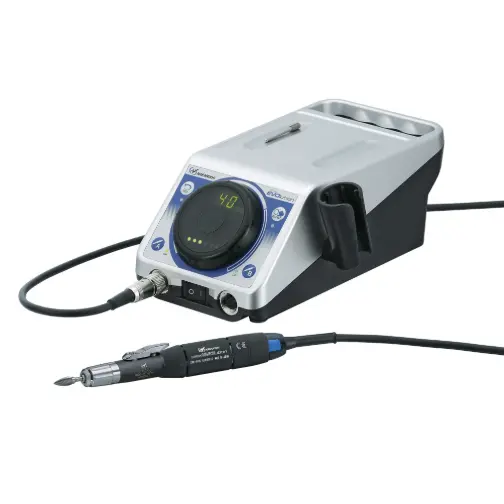
Core Technology: Ultra-precision brushless micromotor.
Highlights: Renowned for vibration-free performance, this model integrates a brushless motor in the handpiece, paired with a digital display, touch-sensitive switches, and NSK’s smart switch technology for seamless speed control.
Specifications: Speed: 1,000–40,000 RPM; Handpiece weight: 3.17 oz; Max torque: 4.3 cN·m; Power: 73W.
Why It Stands Out: Its unmatched precision and minimal vibration make it ideal for intricate micro-grinding and polishing.
Best For: Master engravers and micro-setters focused on fine, detailed work.
3. Foredom K.1050
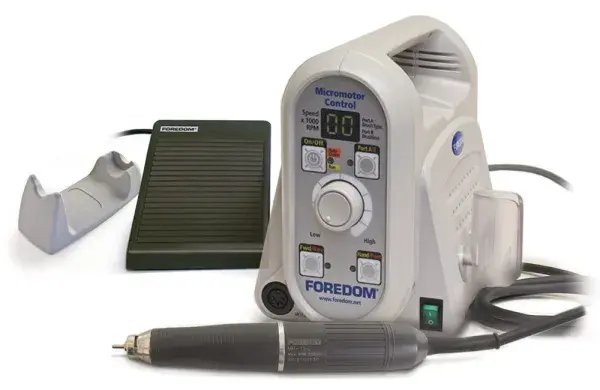
Core Technology: Brushless motor with high torque.
Highlights: This brushless kit eliminates carbon brush maintenance and delivers robust performance across all speeds. Its sealed housing reduces dust, noise, and vibration, with dual ports for optional brushed handpieces.
Specifications: Max speed: 50,000 RPM; Max torque: 10 oz·in (70 mNm); Power: 230W.
Why It Stands Out: Exceptional low-speed torque and a durable, low-maintenance design, with dual-port versatility.
Best For: Jewelers tackling general fabrication, stone setting, and carving with consistent power.
4. Saeshin Strong OZ Elite
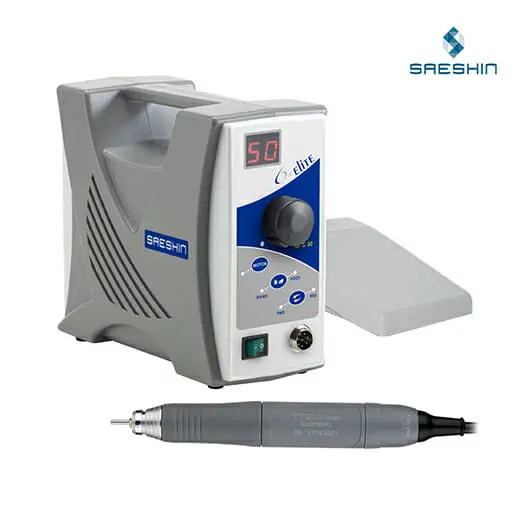
Core Technology: High-performance brushless motor.
Highlights: Features one of the lightest, most compact handpieces available, paired with a digital display, self-diagnostic error reporting, and memory storage. It excels in low-speed torque.
Specifications: Max speed: 50,000 RPM; Max torque: 8.2 N·cm; Handpiece weight: 170g.
Why It Stands Out: Combines power with an ergonomic, lightweight design, perfect for extended use without fatigue.
Best For: Jewelers needing portability and comfort for detailed, prolonged tasks.
5. RHJC Prime Sense A7
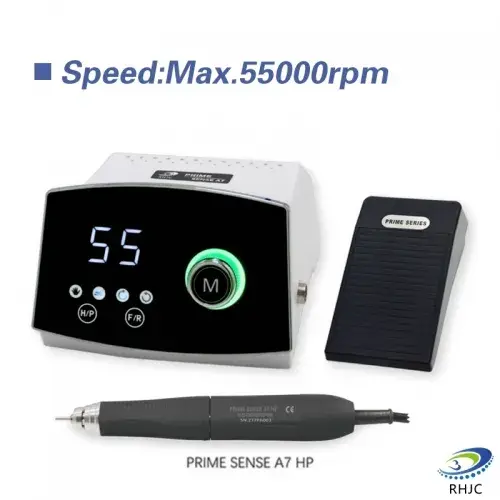
Core Technology: A new generation of brushless motors for more stable performance.
Highlights: A modern and minimalist design with a high-tech feel, equipped with a handpiece that boasts a high speed of 55,000 RPM and a powerful torque of 8.5 N·cm
Specifications: Speed: 0–55,000 RPM; Power: 240W; Max torque: 8.5 N·cm; Direction: Forward/Reverse.
Why It Stands Out: With its super-performance, robust torque, and a stable brushless motor, it's a reliable workhorse.
Best For: Professionals, especially jewelers who require high torque for heavy grinding and polishing tasks.
6. NSK Espert 500
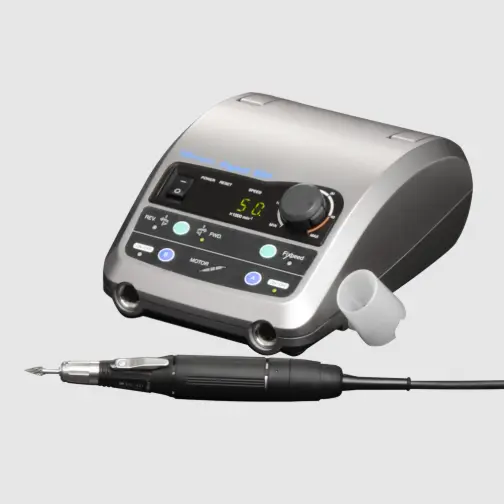
Core Technology: Brushless motor with microprocessor control.
Highlights: Offers microprocessor-based control for optimal performance, with high power, quiet operation, and low vibration. Available in Compact (ENK-500C) and Torque (ENK-500T) variants.
Specifications: Speed: 1,000–50,000 RPM; Power: 140W (Compact), 200W (Torque); Max torque: 6.0 cN·m (Compact), 8.7 cN·m (Torque).
Why It Stands Out: Superior torque and customizable control for versatile applications.
Best For: Professionals seeking precision and power for both delicate and robust tasks.
7. Marathon Handy 700
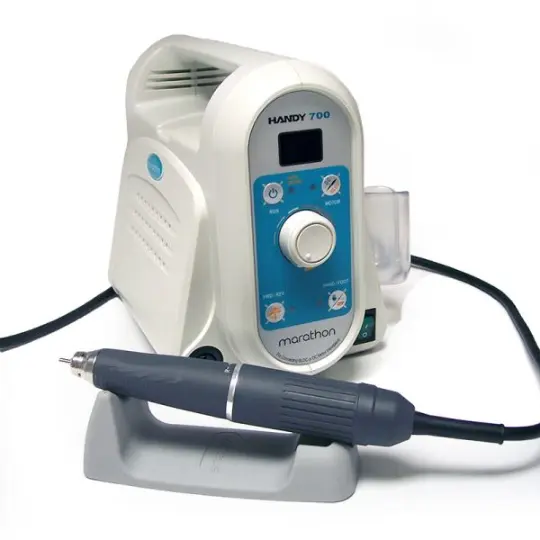
Core Technology: Brushless motor with digital control.
Highlights: Features a digital RPM display, self-diagnostics, error reporting, and auto-cruise for consistent speed. Delivers strong torque across various applications.
Specifications: Max speed: 50,000 RPM; Torque: 7.8 N·cm; Dual voltage: 110–120V / 220–240V.
Why It Stands Out: Auto-cruise and robust digital features make it ideal for repetitive tasks.
Best For: Jewelers focused on grinding, finishing, and polishing with consistent performance.
8. Badeco MX-2
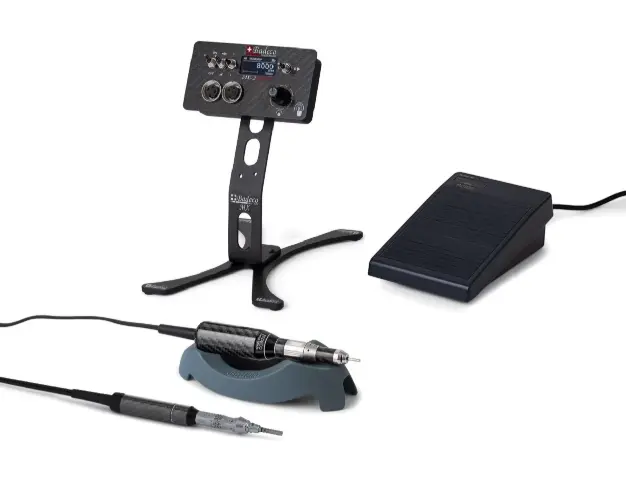
Core Technology: Dual carbon fiber motors with memory system.
Highlights: Includes an OLED speed indicator and a dual-motor COMBI kit (powerful RS2000 rotary motor and precise RS3000SP nano motor with hammer function). Excels in both rotary and precision hammering tasks.
Specifications: Performance varies by motor setup, optimized for specialized tasks.
Why It Stands Out: Swiss-made quality with a versatile dual-motor system for rotary and hammering work.
Best For: High-end jewelers needing both power and precision for setting and rotary tasks.
9. RHJC RENHE-SENSE-A3a 35k
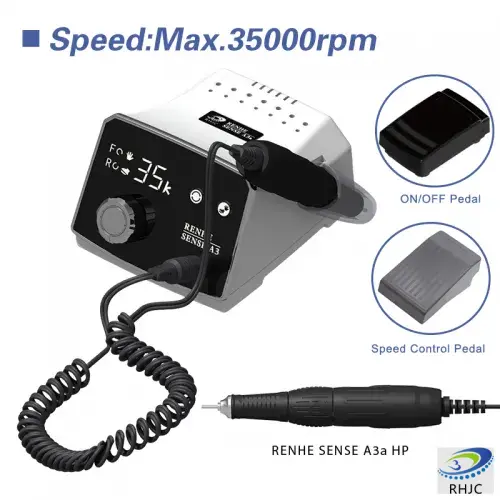
Core Technology: High-speed motor with digital control.
Highlights: Offers a digital speed display, manual/pedal control, forward/reverse rotation, overload protection, and fault indication at a competitive price.
Specifications: Max speed: 35,000 RPM; Output voltage: 0–33V; Power: 70W; Max torque: 3.0 N·cm.
Why It Stands Out: Affordable yet feature-rich, delivering professional-grade performance.
Best For: Apprentices, hobbyists, or budget-conscious jewelers needing reliable functionality.
10. Saeshin Strong 206
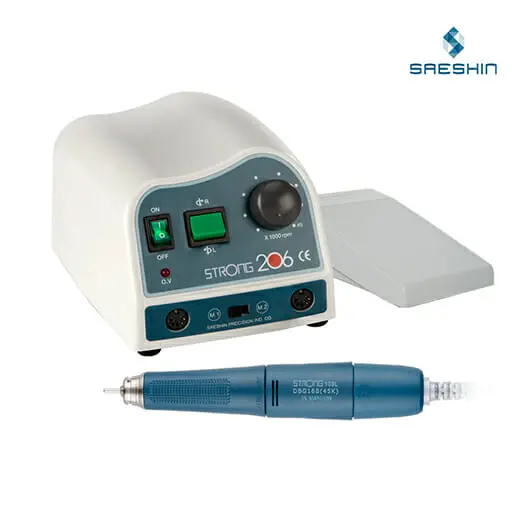
Core Technology: Dual-output carbon brush motor.
Highlights: A high-performance system with a dual-output handpiece, memory storage, and consistent torque across its speed range.
Specifications: Max speed: 45,000 RPM; Max torque: 6 N·cm; Handpiece weight: 238g.
Why It Stands Out: Dual-output design enhances workflow efficiency with reliable brushed motor performance.
Best For: Jewelers seeking a dependable, general-purpose micromotor with dual-handpiece flexibility.
Maintenance and Care Tips
Investing in a quality micromotor is just the start—proper care ensures longevity and optimal performance.
Regular Cleaning of Handpiece and Collet
Dust and debris can accumulate, reducing performance and causing overheating.
- Daily Wipe-Down: After use, clean the handpiece exterior with a soft, dry cloth.
- Collet Maintenance: Weekly (or as needed), open the collet, remove debris with low-pressure compressed air, and avoid harsh solvents or submersion.
Avoid Overloading
Pushing a micromotor beyond its limits can damage the motor and shorten its lifespan.
- Match Tools to Tasks: Use appropriately sized burrs for the material and task.
- Monitor Performance: Unusual sounds or speed drops signal overloading. Ease off and adjust.
- Prioritize Torque: For heavy tasks, choose a micromotor with strong low-end torque rather than relying on high RPM.
Proper Storage
Protect your micromotor from dust and damage.
- Clean, Dry Environment: Store in a stable, dry location away from extreme heat or humidity.
- Secure Placement: Keep the control box stable and the handpiece in its stand or hung to prevent cable damage.
- Collet Care: Store with a burr or blank shank in the collet to maintain tension, avoiding a fully tightened, empty collet.
Brushed Micromotor Maintenance
For brushed models, carbon brushes require regular attention.
- Inspection: Check brushes every 200 hours (or per the manual) for wear (e.g., brushes <2mm or uneven).
- Replacement: Replace brushes in pairs using manufacturer-approved parts, following specific instructions for orientation to avoid motor damage.
Follow Manufacturer Guidelines
Each micromotor has unique maintenance needs. Always consult the manufacturer’s manual for specific cleaning, lubrication, and service intervals to ensure peak performance.
The Right Micromotor: Elevating Your Craft
Choosing the ideal micromotor is more than a purchase—it’s an investment in your artistry. The right tool becomes an extension of your hands, streamlining workflows, reducing fatigue, and bringing intricate designs to life with precision and ease. By aligning your needs, budget, and creative goals with the insights in this guide, you’ll find a micromotor that takes your jewelry making to new heights.