Frustrated by overheating, vibrating dental handpieces that stall your workflow? Choosing an ISO 3964 E-Type micromotor handpiece guarantees 100% universal compatibility and rock-solid performance across any motor body. Here is how to select the most durable, cost-effective gear for your high-volume lab.
I. Key Technical Specifications: Four Essential Metrics Before Purchasing
To ensure a laboratory tool can withstand daily cutting and grinding without frequent breakdown, avoid generic marketing claims. Instead, evaluate these four objective engineering metrics.
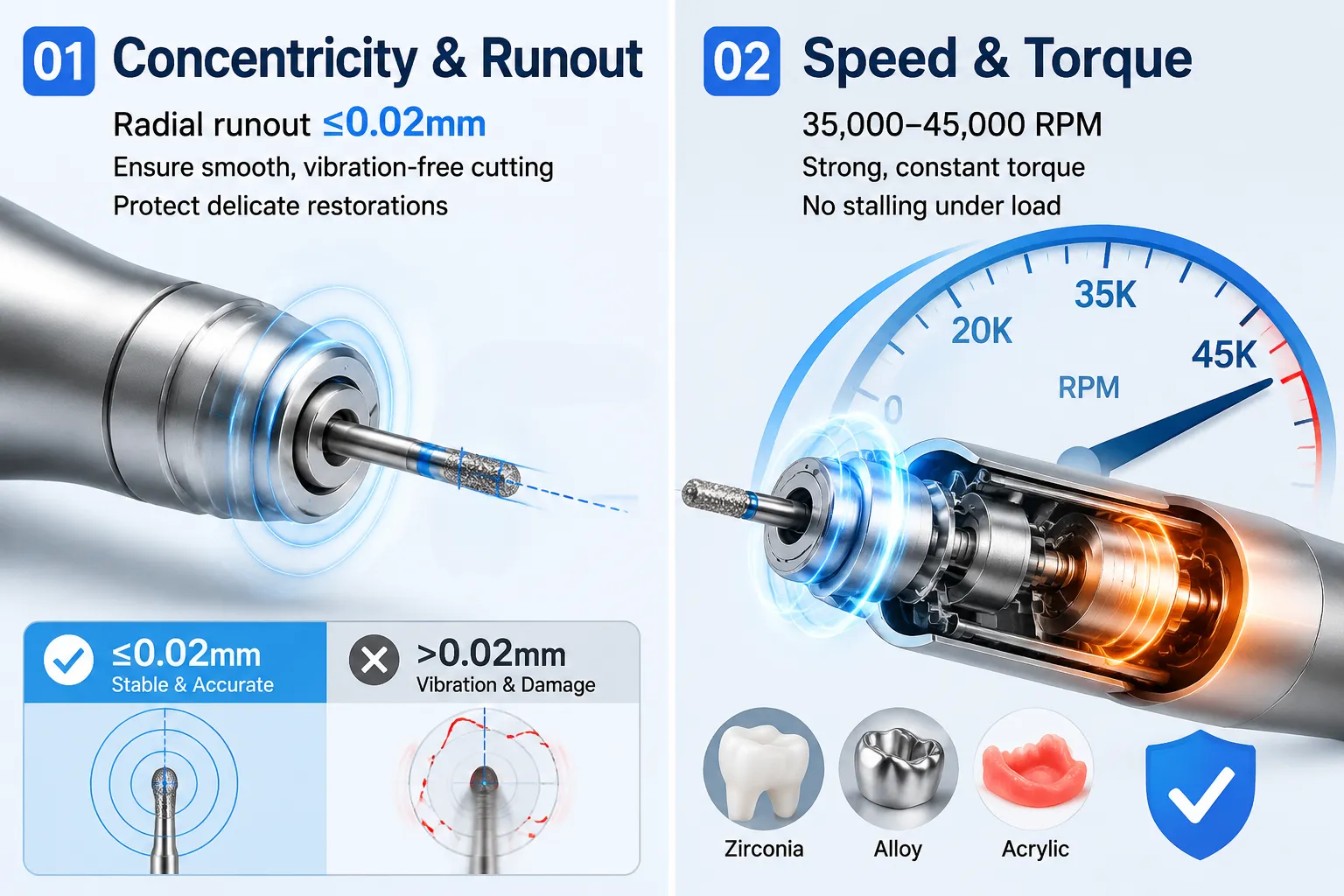
1. Concentricity & Runout
Concentricity determines the stability of the spinning bur. For high-precision laboratory work, radial runout must be tightly controlled to ≤0.02mm. When a technician grinds delicate zirconia crowns or thin ceramic margins, even microscopic wobbling can create micro-fractures in the workpiece. High concentricity guarantees smooth, vibration-free material removal, preserving the integrity of expensive dental restorations.
2. Speed & Torque
Dental labs require tools capable of handling diverse materials, typically operating in ranges from 35,000 to 45,000 RPM. However, raw speed is useless without constant torque control. When shaping dense materials like chrome-cobalt alloys or tough acrylic resin denture bases, the handpiece must maintain its cutting power at lower speeds without stalling or lagging under resistance.
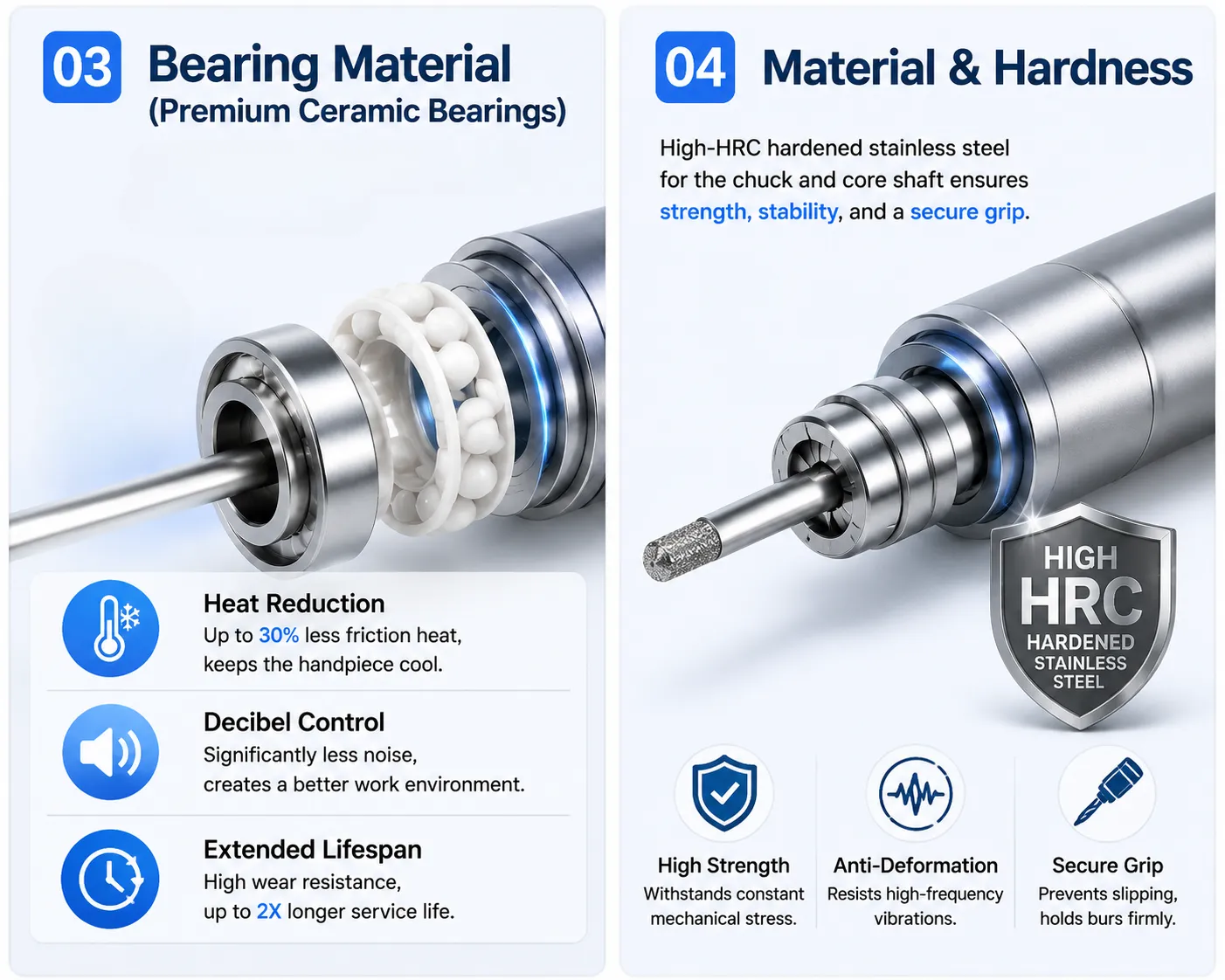
3. Bearing Material (Premium Ceramic Bearings)
The internal bearing is the heart of the micromotor system. Upgrading from traditional steel ball bearings to premium ceramic bearings yields immediate operational benefits:
- Heat Reduction: Ceramic bearings generate up to 30% less friction heat, keeping the sleeve cool during continuous operation.
- Decibel Control: They operate with significantly less noise, creating a better working environment.
- Extended Lifespan: Higher wear resistance minimizes structural play over time, doubling the service life of the internal assembly.
4. Material & Hardness
The internal chuck and core drive shaft must endure constant mechanical stress. Industrial-grade handpieces utilize high-HRC hardened stainless steel for these components. This specialized heat treatment prevents the chuck from deforming or slipping under the high-frequency vibrations of heavy-duty material removal, ensuring a secure grip on the bur at all times.
II. 100% Compatibility List: Which Motors are Plug-and-Play?
System integration should never be a guessing game. Perfect plug-and-play compatibility is guaranteed for any equipment built to the international ISO 3964 standard.
Cross-Brand Integration Matrix
A standard E-Type attachment will mount directly onto mainstream electric micromotor control units across the dental industry. Whether you are using specialized lab systems or versatile clinical setups, the interface matches seamlessly across various established brands:
| Handpiece Type |
Primary Laboratory Application |
Compatible Motor Systems |
| Straight Handpiece |
Heavy contouring, bulk acrylic reduction, stone model shaping, and macro-alloy adjustments. |
RHJC, NSK, Marathon, and other universal ISO 3964 E-type motor bodies. |
| Contra-Angle Handpiece |
Fine margin adjustments, precise internal crown adjustments, and detailed characterization. |
RHJC, NSK, Marathon, and standard dental lab control units. |
III. Dental Lab E-Type Handpiece Performance Matrix
For a quick reference during procurement decisions, this structural matrix maps technical capabilities directly to practical laboratory workflows:
| Features & Specifications |
Technical Metrics |
Primary Lab Application |
| ISO 3964 E-Type Interface |
Universal mechanical connection |
Quick switching between straight and contra-angle attachments on existing motor lines. |
| Ultra-Low Runout |
≤0.02mm radial deflection |
High-precision crown and bridge detailing; safe adjustments on brittle ceramics. |
| Optimized Airflow Cooling |
Internal ventilation pathways |
Prevents heat buildup during continuous, multi-hour production cycles. |
| Standardized Chuck Size |
2.35mm (Standard shank diameter) |
Fits all standard dental lab burs, cross-coiled cutters, and polishing wheels. |
| High Rotational Capacity |
Up to 40,000 RPM |
Efficient heavy-duty bulk cutting, alloy finishing, and zirconia framework sprue removal. |
IV. Solutions to Common Pain Points: Addressing "Overheating" and "Vibration"
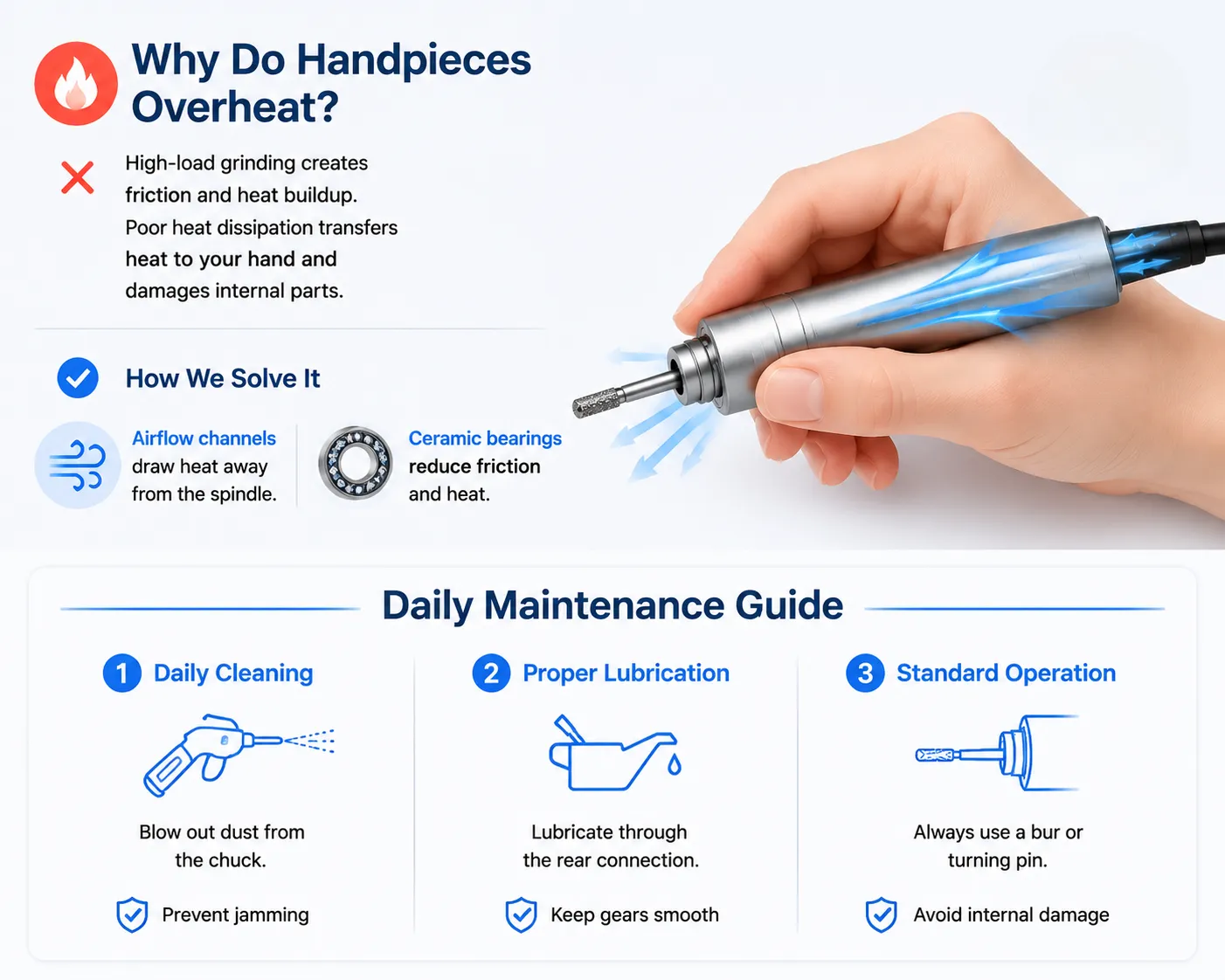
Why Do Handpieces Overheat?
Continuous high-load grinding generates rapid internal friction between moving parts. If a handpiece lacks proper heat dissipation, this thermal buildup transfers directly to the technician's hand and degrades internal components.
To solve this, professional-grade designs utilize integrated airflow channels that draw heat away from the internal spindle, paired with low-friction ceramic bearings that inherently minimize thermal generation.
Daily Maintenance Guide
Adhering to a strict, simple maintenance routine can double the operational lifespan of your laboratory equipment:
- Daily Cleaning: After every shift, use a clean air gun to blow out residual resin, composite, or metal dust from the front chuck assembly. Preventing particulate buildup stops the internal spring mechanism from jamming.
- Proper Lubrication: Regularly apply high-quality, specialized dental lubricant through the rear E-type connection interface to keep the internal gears spinning smoothly.
- Standard Operation: Never run the micromotor without a test bur or turning pin fully inserted and locked into the chuck. Running an empty, unlocked chuck causes immediate structural damage to the internal spring tensioners.
V. B2B Wholesale and OEM/ODM Customization Services
As a dedicated manufacturer and global supplier of professional micromotor tools, RHJC provides direct supply-chain solutions tailored for dental laboratories, regional distributors, and dental equipment brands.
Factory-Direct Advantages
Operating from our independent manufacturing facility allows RHJC to control every phase of production—from the precision machining of high-HRC stainless steel spindles to the final balancing tests for concentricity. By eliminating intermediate trading companies, we pass direct cost savings and verifiable quality control to our partners.
B2B Commercial Support
- OEM/ODM Customization: We offer comprehensive private label services and custom branding, allowing you to easily feature your own logo on the handpiece body alongside tailored, retail-ready packaging.
- Tiered Wholesale Pricing: Benefit from scalable pricing structures with highly accessible Minimum Order Quantities (MOQs), allowing dental labs to upgrade their entire inventory efficiently.
- Dedicated After-Sales Inventory: All equipment comes backed by a comprehensive one-year warranty. Furthermore, we maintain a constant, long-term stock of critical wear-and-tear components—including replacement bearings, carbon brushes, and chuck assemblies—ensuring your lab experiences minimal operational downtime.
Conclusion
Upgrading to a high-concentricity, wear-resistant E-type micromotor handpiece removes a major point of friction from the daily dental lab workflow. By focusing on verifiable technical metrics like ≤0.02mm runout and ceramic components, laboratory owners can significantly boost technician daily productivity while reducing long-term replacement costs.